Grolar Pizzly
Algorithmic folklore and modern mythology
- year
- 2024
- w/
- CDC · FMK
- role
- artist, researcher, programmer
- at
- FMK, Belgrade & Šok Zadruge, Novi Sad.
(Video installation *Exhibited in Sok Zadruga, Novi Sad)
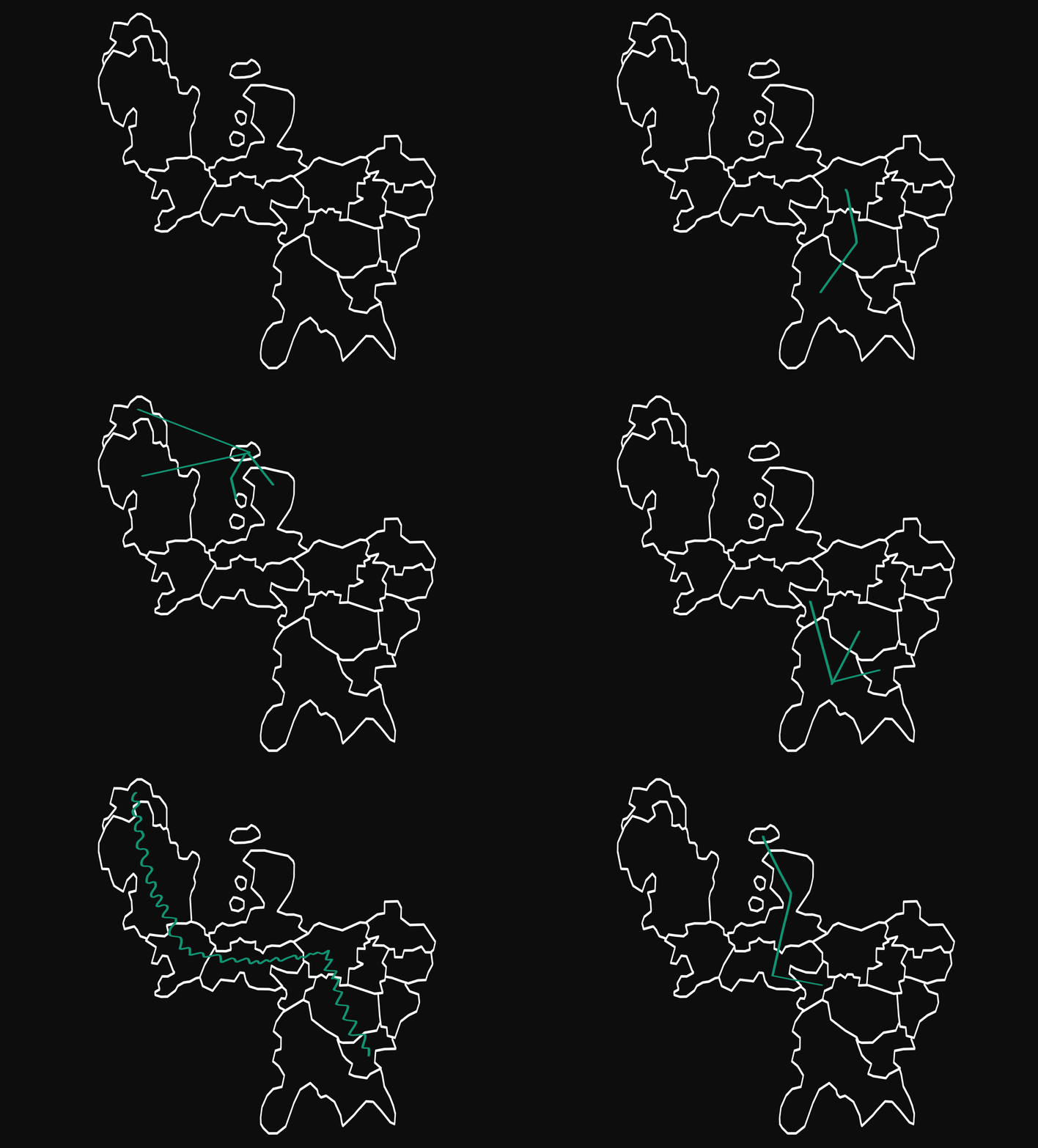
This project explored magical thinking on today’s Internet using the paradigm of data art, generative graphics and experimental cartography. The theoretical part of this thesis examines collective reactions in the digital world, navigates through the epistemological problem of the human need for interpretation and people’s dissatisfaction with current narratives. For the practical portion of this project we are developing an interactive atlas of modern mythology using graph theory and semantic field analysis to coordinate data, and Python and JavaScript to visualize these cognitive phenomena.
This project explored magical thinking on today’s Internet using the paradigm of data art, generative graphics and experimental cartography. The theoretical part of this thesis examines collective reactions in the digital world, navigates through the epistemological problem of the human need for interpretation and people’s dissatisfaction with current narratives. For the practical portion of this project we are developing an interactive atlas of modern mythology using graph theory and semantic field analysis to coordinate data, and Python and JavaScript to visualize these cognitive phenomena.
Magical thinking is the belief that certain events are causally related despite the lack of any plausible connection. As such, they were often portrayed as the result of supernatural powers. One such example is the event that took place in the middle of 2023 when, as a result of climate change, polar bears migrated south and interbred with grizzlies, which are the original inhabitants of that territory. People living in these areas have reported encountering Grolar-Pizzly hybrids and claim that the hybrids are significantly more aggressive than the local bears. On social networks and channels such as YouTube and TikTok, which deal with the topic of ecology and zoology, reports and reports about this phenomenon appeared. Semantic analysis of digital comments, based on NLP models, revealed that the term care has a significant score of 0.7. Through manual checking and more detailed sorting of the data, we discover that the comments from this category displayed characteristics of general anxiety, tendencies towards mystification, as well as existential fear. Users showed a tendency towards magical thinking, comparing the bear’s aggression to the revenge of supernatural forces. This is an example of how Internet users together, mediated by digital algorithms, generate new narratives and new mythologies that symbolize complex system dynamics in the 21st century.
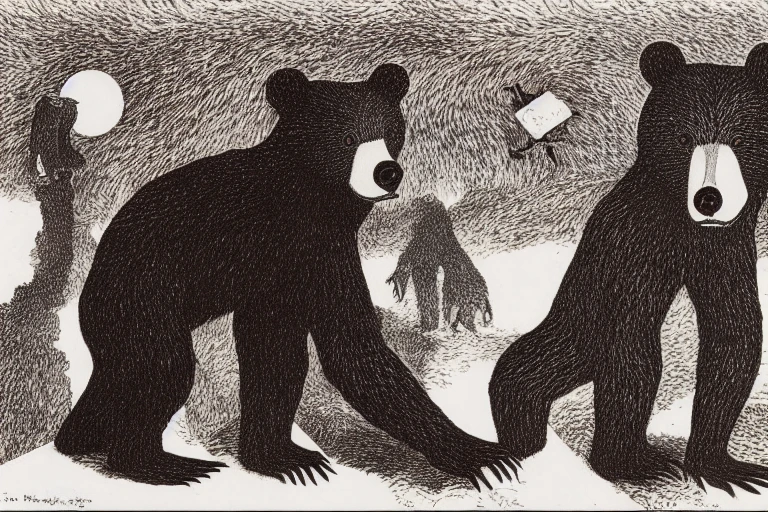
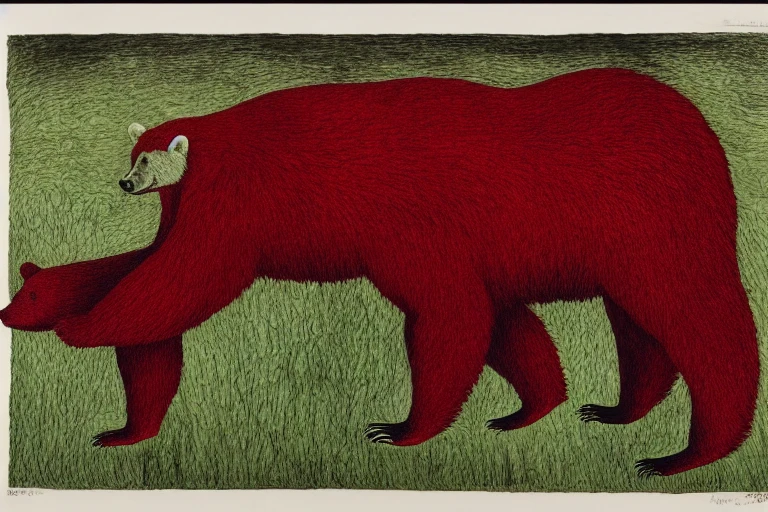
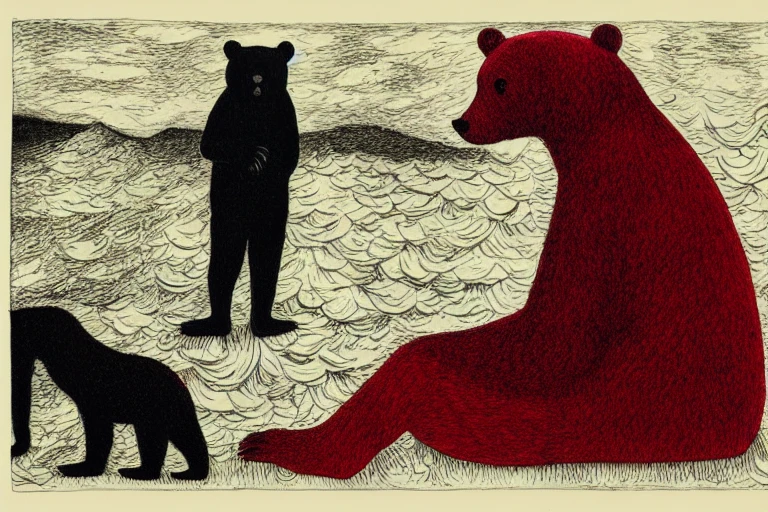
This project is a continuation of the Pizzly project which used online reactions related to the Grolar-Pizzly phenomenon as prompts for a generative diffusion model. The results you can see below.
Folklore refers to culturally specific beliefs, symbols, stories, and customs that are transmitted orally, in writing, or through rituals within a community. It includes myths, legends, fairy tales, proverbs and other types of collective expression. Folklore is not limited to mythical or supernatural elements, but includes everyday rituals and stories shared within a community. On the other hand, myths are often seen as religious stories that provide a cultural or religious framework for understanding the world and finding one’s place in it. Modern mythology includes urban legends, popular fiction, and other representations that shape culture. Social media is a form of modern mythology, through which myths and beliefs within contemporary global culture are transmitted. Social networking algorithms place us in relation to our interactions into digital communities with which the algorithm believes we share attitudes. This is how closed bubbles are formed, so-called echo chambers, and their folklores. People form these digital spaces to satisfy some of their curiosity or to gain a sense of belonging to a community based on their interest, style, attitude or some other form of identification. As an inquisitive digital ethnographer, modern man is privileged to explore this fluid ability to participate and advance his (Piagetian) schemas of skill and thought through community while retaining his autonomous thought, emotion, and responsibility. These symbolic and language games connect subjective mental models to the dynamics of objective systems in the real world, giving us more insight into how magical thinking and biases transform the perception of assimilation into monster genesis.
The old world is dying, and the new world struggles to be born: now is the time of monsters.
The essence of this research is to understand not only the social responses to Grolar-Pizzly and other contemporary phenomena, but also the wider implications that the understanding of these phenomena has as a symbolic representation of human fascination with the unknown. Examining the way ancient people explained natural phenomena through mythology and deities, we draw parallels with contemporary reactions to modern events. These historical contexts lead us to question the extent to which we project our own symbols and narratives in an attempt to interpret the complexity of the contemporary world in order to interpret the dynamics of today, and how we do so.
However, we must also consider the fact that ideas created through magical thinking are not completely wrong. Magical thinking often rests on correct intuition, but comes to the wrong conclusion because rational interpretation is lacking. In addition to ancient mythologies, we will also consider the field of science fiction, which also dealt with abstract concepts long before science and technology confirmed them. Using analysis and visual representation the thesis states that throughout history our society has tried to visualize and explain what is far and unknown to it using imaginative narratives.
also see