Prompt injection Handbook + Bot
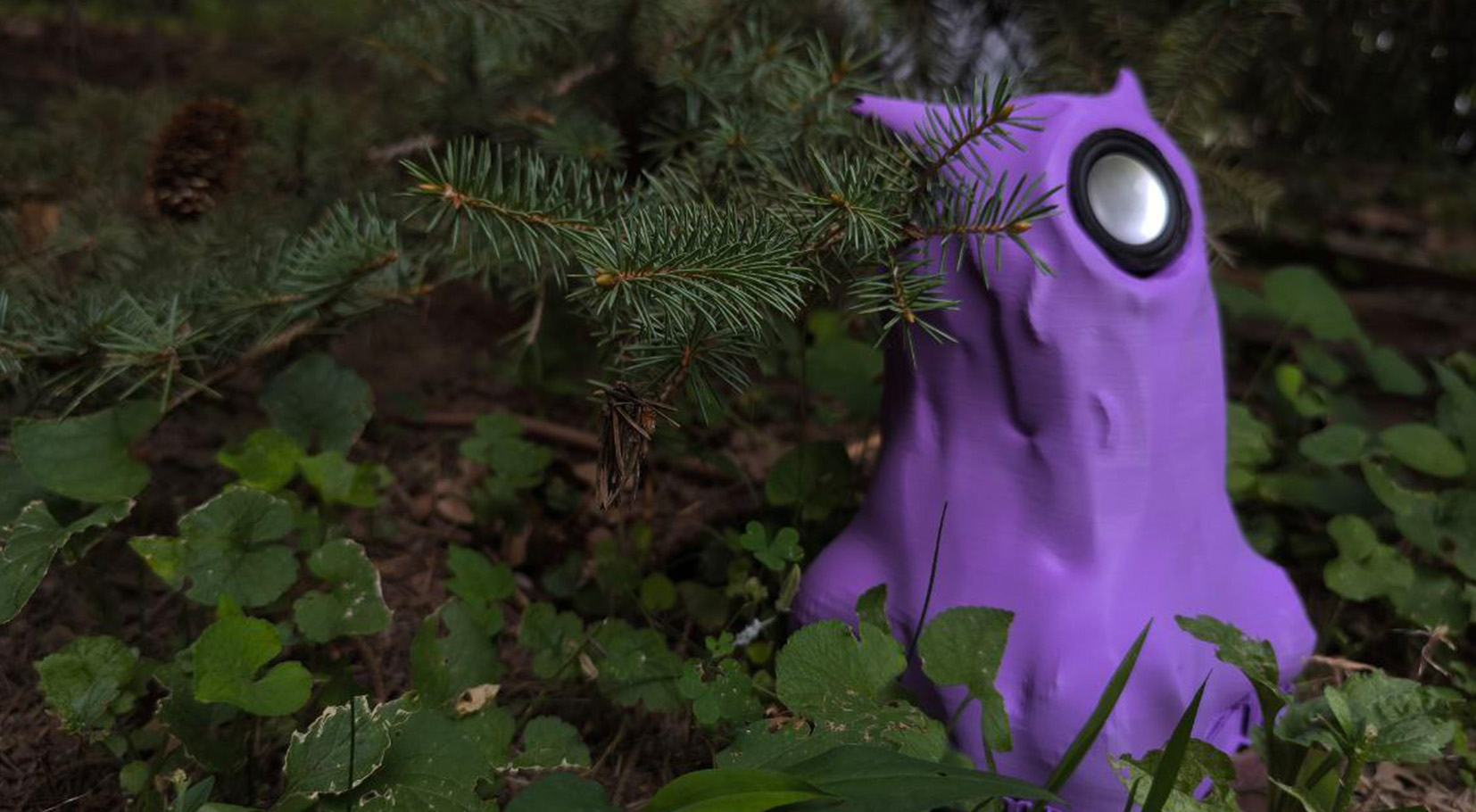
Publication + Dada robot exploring prompt injections as tactical new-media art.
- year
- 2024
- w/
- CDC · FMK
- role
- artist, researcher
- at
- Dorćol Platz, Belgrade
Learn the rules like a pro, so you can break them like an artist
Hacking has always been an inherently human endeavor, reflecting our desire to understand and repurpose technology in novel ways. It is a testament to human ingenuity and curiosity, demonstrating the ability to see beyond a thing’s intended use and explore its untapped potential.
Through out history, humans have used hacking to uncover hidden capabilities, create new functions, and push the boundaries of what is possible. Ever since we started using stick and rocks as tools and weapons, we have been fostering this system of thinking. Following this line of thought, we can say that prompt injections are just another outcome of humanity’s ability to reshape things into serving a new purpose.
.jpg)
.jpg)
The process of hacking an AI system requires a lot of tweaking, in which there is a kind of art. While hacking LLMs, a lot of different, nonsensical results are obtained. System prompts, rules, messages from past conversations, bits of training data, hallucinations, etc. may be leaked. In a certain way, people project their opinion onto bots. The publication presents the research results of ten different scenarios. On the left is always the Prompt Injection I wrote, and on the right is the answer from the big language model. After protracted hacking of each of these models, I chose from my notes the most typographically and emotionally interesting outputs to display. The first 5 scenarios have small infographics and explanations of prompts. These scenarios display the everyday, “activist” hack. The last 5 scenarios are Dadaistic hacks, meaning that we explore the breaking of the LLM. The robot I made “reads” (outputs) exactly these Dadaistic outputs, making it a poetic Data-Dadaist performance.
The bot and the hacker create a performance together in which the hacker writes a text based on intuitive knowledge of technology and human ingenuity, and the bot responds to it with an unpredictable text derived from its synthetic subconscious. In this way, we do not attribute human characteristics to the bot, but follow the thesis that large language models are in themselves statistical reflections of human language practice and, in a certain sense, of human consciousness and subconsciousness. One model consists of billions of texts and human text parameters. By properly interacting with these softwares, we get interesting psychoanalytical insights, not into the self-aware robotic, but into the collective human. These models are based on human-made text. Hence, they should not be treated as beings with consciousness, but as machines that mathematically synthesize human work.
.jpg)
Handbook full online version
also see